Advice · 5 min read
Cedar Hedge Trimming in Chambly: What a Trimmer Checks Before Cutting
Whether your hedge was recently planted or already well established, cedar hedge trimming in Chambly follows the same logic: we look at the plant's real condition before picking up the trimmer. Height, density, this year's growth and wind exposure determine what can be cut without damaging the hedge. An online quote then gives you a written price based on these dimensions.
Gemme sa taille ·
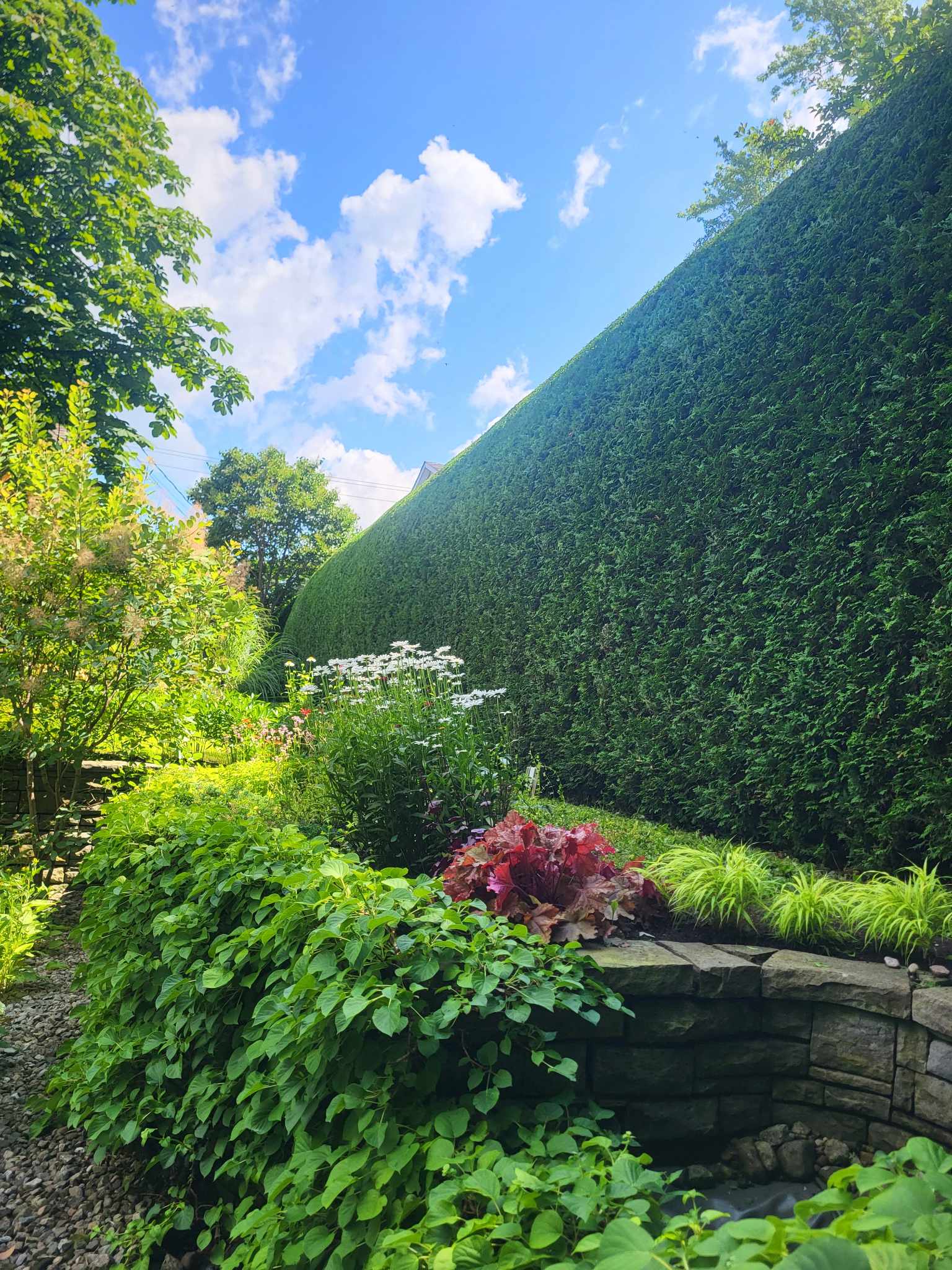
Before cutting: what a trimmer looks at on your cedar hedge
Chambly has its share of waterfront properties, hedges planted tightly between two homes, and cedars that have aged without regular upkeep. Before any cutting happens, a trimmer looks at several concrete things:
- The current height and width, not just what the homeowner would like to have.
- The amount of this year's growth, meaning the green, tender part that's grown since spring.
- The density of the foliage, to see if the hedge is still full or starting to thin out at the base.
- Exposure to wind and snow, which influences the shape to aim for.
- Any dead branches or browned sections, often caused by frost or lack of light.
These observations determine the type of trim to do, not the other way around. The six types of trimming (maintenance, shaping, rejuvenation, decorative, cutback, and severe) each address a different hedge condition, and the details of each are explained on the types of trimming page.
This year's growth versus old wood
A cedar doesn't recover well when you cut into brown old wood. The general rule is simple: you remove the green, tender growth from this year, not the older, harder wood underneath. That's why a hedge that's been neglected for too long is trickier to work on: if the green has disappeared in some spots and only dry wood remains, there's much less room to work with. A trimmer who respects this limit won't promise a harder cut than the hedge can handle. This is also why trimming isn't done just any time: it happens once the year's growth has come in, generally from late June through fall, within a season that runs from mid-April to the end of October.
The shape that helps a hedge get through winter
The shape given to a cedar hedge isn't just about looks. A hedge that's wider at the base and slightly narrower toward the top lets snow slide off more easily and keeps the base exposed to light, which helps the foliage stay full along the whole height. A hedge trimmed too straight, or wider at the top than the bottom, collects more snow on top, which can crush branches and leave visible gaps come spring. This is one of the elements a trimmer adjusts based on the property's exposure, whether the hedge runs along a street, a fence, or between two backyards.
One or two trims a year: what changes the decision
Some hedges only need one maintenance trim a year to stay clean and well defined. Others, especially those that need to be thickened up or brought back to a neater shape after years without cutting, call for a different approach, sometimes spread over more than one visit. The decision depends on the starting condition: a hedge that's been well maintained year after year is simple to manage, while one left to grow on its own for several seasons often needs a gradual rejuvenation rather than a single drastic cut.
Why describing your hedge precisely makes all the difference
Since the price depends directly on the hedge's dimensions and condition, the more precise the description, the more the written price reflects the reality of the property. Length, height, width, and any particularities like thin sections or a hedge tucked into a corner lot: these are the details that affect the work involved, not some generic pricing table. The network of partner trimmers serves eight regions, including Montérégie where Chambly is located, and the covered areas are detailed on the service areas page.
Getting a written price without waiting for a visit
You don't need to wait for a trimmer to come by in person to get an idea of the price. The online quote lets you describe your hedge and get a written price in under three minutes, based on the dimensions you provide. It's a concrete way to know what to expect before the trimming season even starts. For more details on how the network operates and its background, the about page explains the story behind the company.
Related reading:
Frequently asked questions
When should a cedar hedge be trimmed in Chambly?
According to Gemme sa taille, trimming is done once the year's growth has fully come in, generally from late June through fall, within a season that runs from mid-April to the end of October. Trimming too early risks cutting growth that's still fragile.
Can a cedar hedge be cut down to the old wood?
No. According to Gemme sa taille, the general rule is to cut only the green, tender growth from this year, not the brown old wood underneath. Cedars don't recover well from old wood, so a trimmer stays careful on this point.
How many times a year should a cedar hedge be trimmed?
It depends on the hedge's condition: one maintenance trim a year is often enough for a well-kept hedge, while a hedge that's been neglected for a long time may need a gradual approach spread over more than one visit.
How can I get a price for cedar hedge trimming in Chambly without a visit?
As Gemme sa taille explains, the online quote asks you to describe your hedge's dimensions and gives you a written price in under three minutes, with no need for a trimmer to visit your property beforehand.
What shape should a cedar hedge have to better withstand winter?
A shape that's wider at the base and slightly narrower toward the top helps snow slide off more easily and keeps the base of the hedge exposed to light, which supports full foliage along the entire height.