Advice · 6 min read
Cedar Hedge Installation in Sainte-Julie: Where to Start with Pruning
After a cedar hedge installation in Sainte-Julie, the same question always comes up: where do you start with pruning? The answer depends on the hedge's age and how well it's taken root. The cedar hedge pruning service often starts with a light maintenance trim, once the year's new growth has come in, without touching the old wood.
Gemme sa taille ·
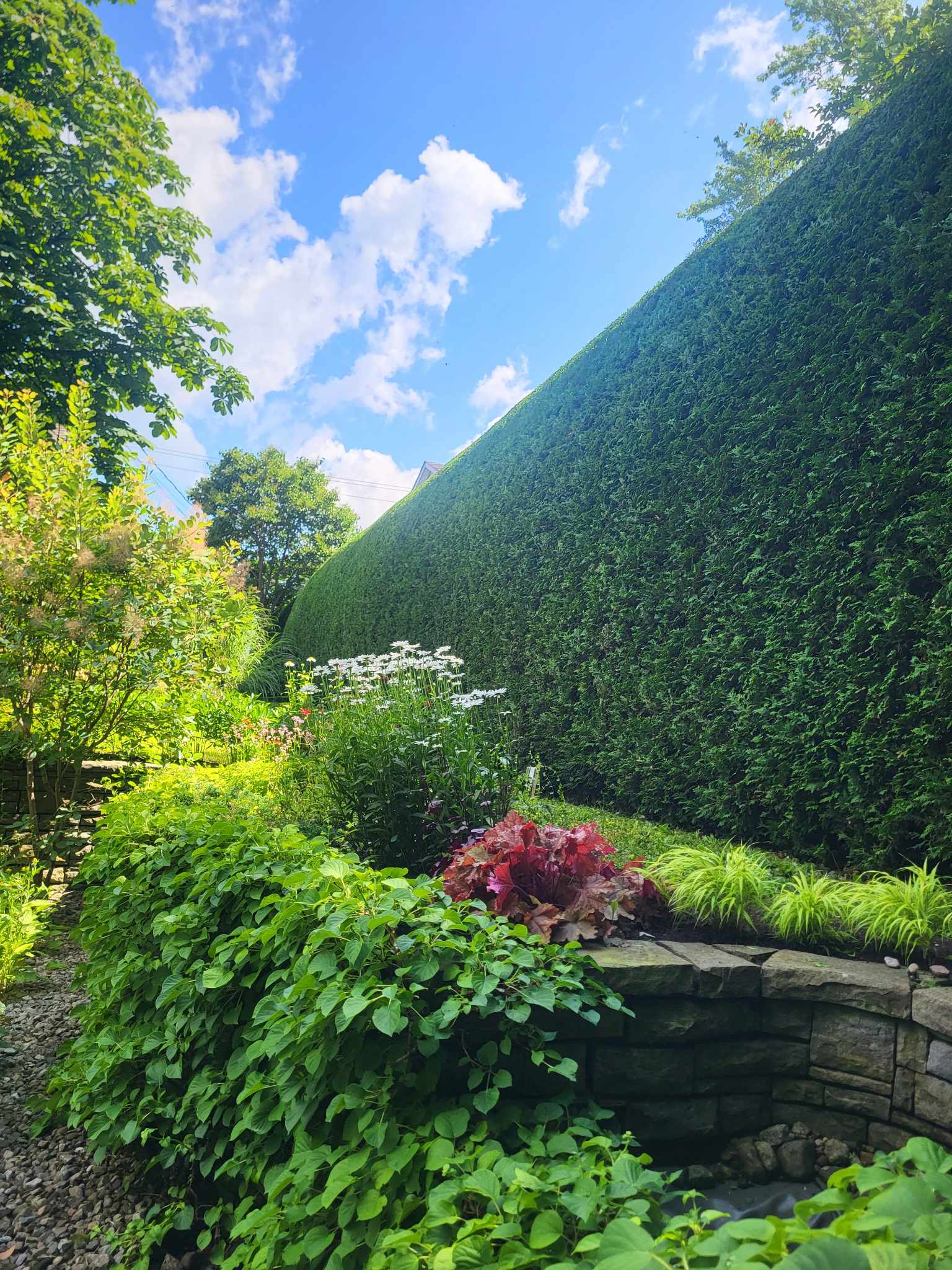
A Young Hedge in Sainte-Julie: Where to Start
A freshly installed hedge needs time before its first real cut. The wood is still tender and doesn't react the same way as a hedge that's been established for several years. Before thinking about shaping or thickening it up, you need to let the hedge root in and grow a bit first.
Pruning happens once the year's new growth has come in, generally from late June through fall, within a season that runs from mid-April to the end of October. Trimming too early in spring, before new growth is visible, doesn't do any good: you risk cutting into wood that hasn't shown its true form yet.
For a new hedge, the first pass rarely aims to noticeably reduce height or width. It's more about evening things out slightly and making sure the hedge is growing uniformly along its whole length, which sets the stage for the trims that follow.
The Six Types of Pruning, and Which One Fits Your Hedge
Not every cedar hedge needs the same kind of work. Our network of partner arborists works with six types of pruning: maintenance, formative, rejuvenation, decorative, cutback and severe. A new hedge in Sainte-Julie almost always falls under the formative or maintenance category, never rejuvenation or cutback, which are reserved for older hedges that have become too dense or too thin.
- Maintenance pruning: keeps the current shape, a light and regular trim.
- Formative pruning: shapes the hedge during its early years to guide its future density.
- Rejuvenation pruning: brings new life to a tired or thin hedge.
- Decorative pruning: balls, cones, spirals, for shrubs and conifers suited to that kind of shaping.
- Cutback: a more significant reduction in height or width.
- Severe pruning: heavy work on a hedge that's been neglected for a long time.
You can see the details of each approach on the types of pruning page, to compare what matches the actual state of your hedge rather than what you think you want.
What Makes the Price of a Maintenance Trim Vary
No price can be guessed from a distance without looking closely at the hedge, even virtually. What really affects the final cost:
- The hedge's current height and width.
- The total length to be trimmed.
- The state of the foliage, dense, thin, or full of dead branches.
- The type of pruning chosen, a light maintenance trim taking less effort than a rejuvenation or a cutback.
- Access to the property and any obstacles around the hedge.
Rather than guessing, the most reliable way to know where you stand is to describe your hedge in the online quote form. A written price arrives in under 3 minutes, based on the dimensions you provide, with no arborist needing to visit your home.
Common Mistakes with a New Hedge
Certain habits do more harm than good, especially in the first few years after installation:
- Pruning before the year's new growth has come in.
- Cutting too deep into the old wood, which doesn't grow back the same way tender new growth does.
- Waiting too long between two trims, which then forces a more severe cut than necessary.
- Mixing up decorative pruning with formative pruning: a young hedge rarely needs sculpting before it has a stable structure.
The plant itself decides what's possible at each stage. An arborist who looks closely at your hedge, even just from the photos and measurements provided in the quote, can tell you honestly whether it's the right time to intervene or whether it's better to wait another season.
Sainte-Julie Within the Network of Partner Arborists
Sainte-Julie is part of Montérégie, one of the eight regions served by the network, alongside the South Shore and North Shore of Montreal, Montreal, the Laurentians, the Eastern Townships, Quebec City and Saguenay-Lac-Saint-Jean. You can check the full list of areas covered on the service areas page to confirm your address is covered before filling out your quote.
Next Step for Your Hedge
If your cedar hedge was just installed in Sainte-Julie, the best way forward is still to describe its current state in the online quote form: height, width, length and the type of pruning you're considering. You'll get a written price with no need to wait for a visit, and you can then decide whether it's the right time to step in or whether it's better to wait another season.
Related reading:
Frequently asked questions
What's the price of a cedar hedge installation?
We don't handle planting, only cedar hedge pruning once it's already in place. The price of a trim depends on the height, width and condition of your hedge, and you get it through the online quote form with no visit required.
What's the ideal spacing between cedar trees in a hedge?
Spacing mostly depends on the variety and the width you want once the hedge is mature, something to check with your nursery grower at planting time. Once the hedge is established, it's actually its current width that determines the type of pruning needed.
What's the best time to plant a cedar hedge?
Planting is usually done in spring or fall, when the soil is neither frozen nor too dry. For pruning afterwards, the season runs from mid-April to the end of October, and the work is done once the year's new growth has come in.
What's the price of a cedar hedge in Quebec?
The price varies depending on whether it's a planting or a maintenance job, and on the length, height and type of pruning wanted, maintenance, formative, rejuvenation, decorative, cutback or severe. The online quote gives you an exact written price in under 3 minutes.
When should maintenance pruning start on a new hedge in Sainte-Julie?
You need to wait until the year's new growth has fully come in before doing any work, generally starting in late June. Trimming too early in spring risks cutting into growth that's still fragile and hasn't finished forming.