Advice · 5 min read
Cedar Hedge Trimming: Maintenance, Shaping, or Rejuvenation, How to Choose
Choosing between a maintenance, shaping, or rejuvenation trim for your cedar hedge depends on the actual condition of your hedge, not what you'd ideally like it to be. A dense, well-formed hedge only needs an annual maintenance trim. A young hedge is worked with a shaping trim. A thin or overgrown hedge calls for a more corrective approach.
Gemme sa taille ·
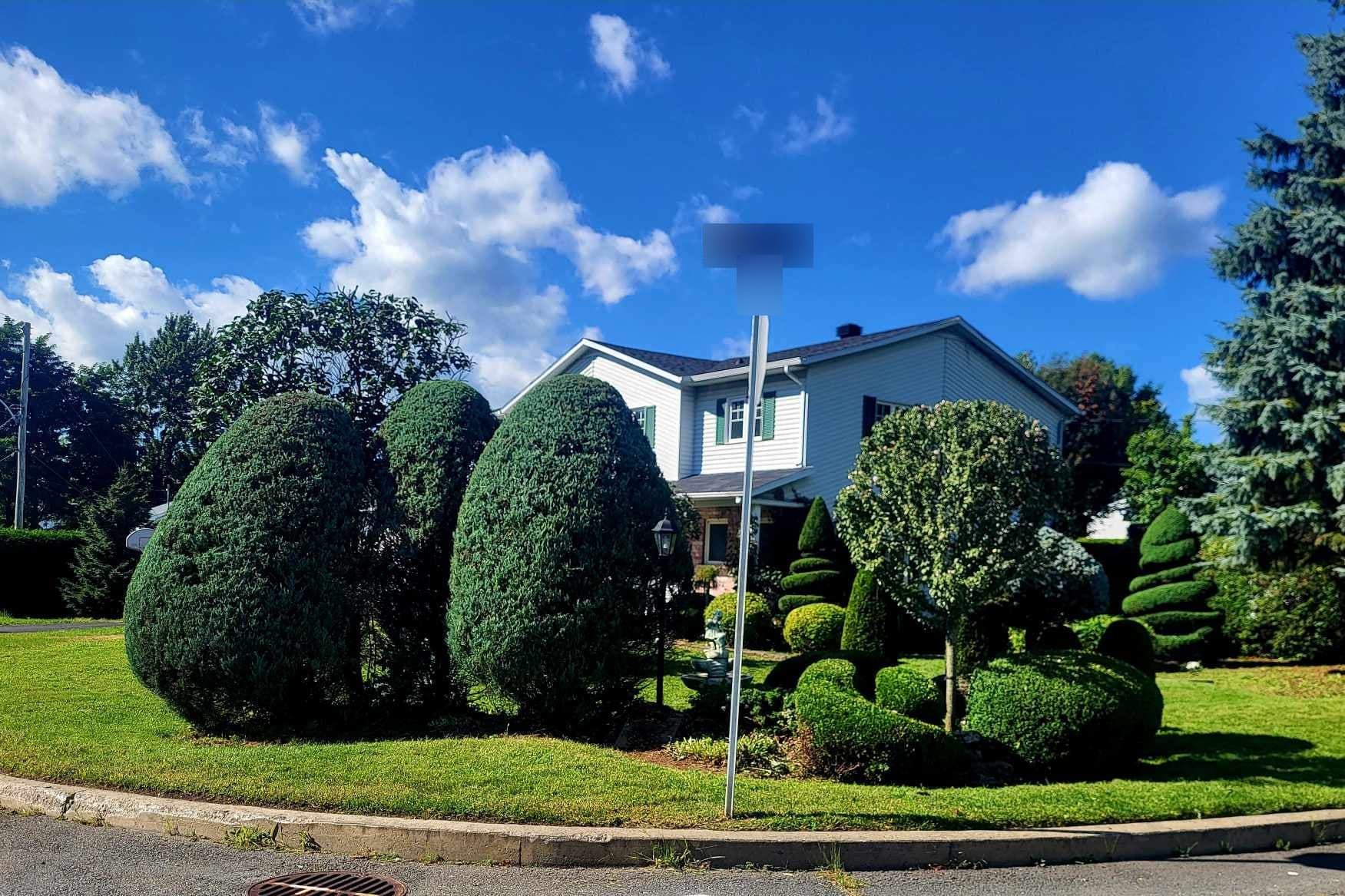
Maintenance trim: when your hedge is already in good shape
A maintenance trim is meant to keep a hedge that already has its shape and density. It involves cutting back the current year's new growth without going into older wood. This is the most common type of trim for a mature cedar hedge that keeps its lines from one season to the next.
This trim is a good fit if:
- the hedge keeps its silhouette year after year
- there are no visible gaps in the foliage
- annual growth stays moderate
Shaping trim: when the hedge is young or still developing
A shaping trim applies to a hedge that hasn't yet reached its intended shape and density. Cuts are made to guide growth, encourage filling in on the sides, and give the hedge a base wider than the top, which helps light reach the lower part of the hedge.
This is the right option if:
- the hedge was planted recently
- it's growing unevenly
- you want to establish a precise line before it becomes hard to correct
Rejuvenation trim: when the hedge has grown out of control
A cedar hedge that has become too tall, too wide, or that's thinning out in the middle needs a more corrective approach. Rejuvenation aims to bring the hedge back to manageable proportions and encourage denser growth, within the limits of what the plant can handle. Cedar doesn't grow back from completely bare wood, so this trim is done gradually rather than in one drastic cut.
Depending on the hedge's condition, a cutback or what's called a severe trim may also be needed. Gemme sa taille works with six types of trims (maintenance, shaping, rejuvenation, decorative, cutback, severe), which allows the work to be adapted to what the hedge can actually handle rather than applying the same cut everywhere.
How to decide without getting it wrong
Before choosing, look at three things:
- Foliage density. Full, compact green everywhere means maintenance. Visible gaps or bare branches mean rejuvenation should be considered.
- Current shape. A line that's still straight and even means maintenance or a light shaping trim. A shape that's been lost over several seasons calls for a more corrective approach.
- Age of the hedge. A young planting needs shaping. A stable, mature hedge needs maintenance. A mature hedge that has taken up too much space needs rejuvenation.
If you're torn between two options, simply describe the dimensions and condition of your hedge in the online quote request. It's the plant that determines what's possible, not a remote estimate.
When to trim a cedar hedge in Quebec
Trimming season generally runs from mid-April to the end of October. In practice, trimming happens once the year's growth is well out, so from late June through fall. Trimming too early, before the new growth has come in, gives a less clean result and complicates the work on the hedge.
This schedule stays the same regardless of the area served, whether your hedge is in Montérégie, on Montreal's South Shore or North Shore, in Montreal itself, in the Laurentians, in the Eastern Townships, in the Quebec City area, or in Saguenay-Lac-Saint-Jean.
What to avoid
A few mistakes come up often with homeowners who trim too early or too aggressively:
- Cutting before the year's growth has come in, which gives an uneven result.
- Cutting too deep into old wood all at once on a hedge that's already weakened.
- Waiting too long between two trims when the hedge has already started thinning out, which makes rejuvenation take longer to achieve.
Getting a written price without waiting for a visit
The price of a cedar hedge trim varies based on the length and height of the hedge, its current condition, the type of trim required, and any prep work needed. Rather than guessing, Gemme sa taille's online quote request asks for your hedge's dimensions and gives you a written price in under 3 minutes, with no visit to your home. If your situation is out of the ordinary or you have questions before submitting your request, you can also reach us through the contact page.
For a decorative hedge, ball-shaped, cone-shaped or spiral-shaped, or for a shrub, conifer, or deciduous tree that needs structuring, the same logic applies: describing the current condition helps determine the right type of trim. If you're not sure how to describe your hedge, fill out the online quote request or contact us to clarify what applies to your situation.
Frequently asked questions
When should you trim a cedar hedge in Quebec?
Trimming season generally runs from mid-April to the end of October. In practice, trimming happens once the year's growth is well out, so from late June through fall, which gives a cleaner result than trimming too early in spring.
What's the best month to trim a hedge?
There isn't one fixed month, but the ideal period starts once the new growth is out, around late June, and continues through fall. The exact timing depends on how fast your hedge is growing that particular season.
What's the price to trim a cedar hedge?
The price depends on the length and height of the hedge, its current condition, and the type of trim needed (maintenance, shaping, rejuvenation, or other). Gemme sa taille gives a written price in under 3 minutes through its online quote request, with no visit required.
What's the best time to trim a cedar?
The best time is after the year's growth has fully come in, generally from late June through fall, within the overall season window that runs from mid-April to the end of October. Trimming too early in spring gives a less even result.
How do I know if my hedge needs rejuvenation rather than just maintenance?
If your hedge keeps its shape and density year after year, an annual maintenance trim is usually enough. If it has become too wide, too tall, or the foliage is thinning out in spots, a rejuvenation trim or a more corrective approach should be considered.