Advice · 5 min read
When to Trim a Cedar Hedge by Season
In Quebec, the right time for cedar hedge trimming comes once the year's new growth has come in, generally from late June through fall, no later than the end of October. Trimming too early in spring damages the tender young shoots, and trimming too late leaves the hedge little time to recover before the cold sets in. For an accurate price based on your specific hedge, an online quote request is still the best place to start.
Gemme sa taille ·
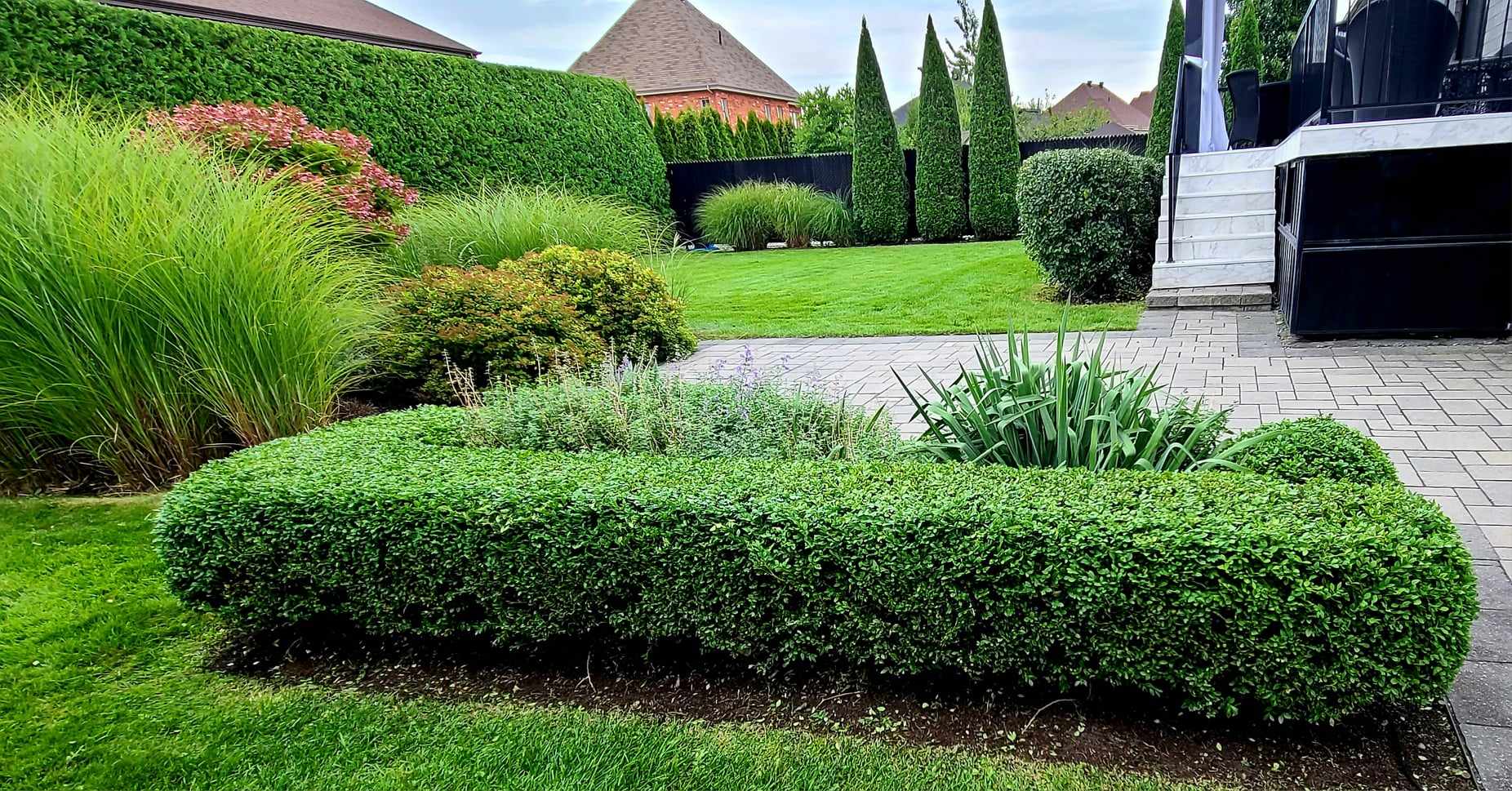
The cedar's growth cycle: the basis for every trimming decision
Cedar grows mostly in spring and early summer. Before that new growth has come in, the foliage is still soft and marks easily. That's why cedar hedge trimming happens after this growth spurt, once the new foliage has hardened up a bit. The working season runs from mid-April to the end of October, but that doesn't mean every week in that window is a good time to trim. The right moment depends on what your hedge has actually grown that year, not on a fixed date on the calendar.
Spring: why it's often too early
In early spring, the hedge is barely out of winter. The new shoots are fragile, and trimming at this point often cuts into wood that hasn't finished forming. The result: uneven sections, foliage that browns in certain spots, and a hedge that looks more damaged than maintained. Spring is better used to observe your hedge, note the areas that are too tall or too wide, and prepare your description for the quote request.
Late June to late summer: the main window
Once the year's growth has come in, generally around late June, the cedar hedge enters its most favourable period for trimming. The foliage is firm enough to be cut cleanly, and the hedge still has several weeks of warm season ahead of it. This is the window when most maintenance, shaping, and decorative trims are done, whether it's to keep a straight line, restore the shape of balls or cones, or simply control the width of a hedge that's encroaching on a driveway.
Fall: what's still possible and what to avoid
As fall approaches, trimming is still possible, but it calls for more judgment. Very heavy trims late in the season should be avoided, since the hedge has less time to absorb the shock before winter. A rejuvenation trim or a major cutback should therefore be planned earlier in the summer rather than at the very end of the season. Past the end of October, trimming stops: the hedge needs to go into winter as it is.
The type of trim also affects the ideal timing
Timing doesn't just depend on the season, it also depends on the type of work required. The six types of trims (maintenance, shaping, rejuvenation, decorative, cutback, severe) don't all have the same tolerance for timing throughout the year. A light maintenance trim can be done several times during the season. A cutback or severe trim, which touches older sections of the hedge, should be planned earlier to give the plant time to respond before fall. This is one of the reasons why describing the condition of your hedge precisely in the quote request helps produce a fair price, without needing an on-site visit.
What makes cedar hedge trimming prices vary
The price of trimming a cedar hedge changes based on several concrete factors: the height and length of the hedge, its current width, the type of trim you're looking for (simple maintenance versus heavier rejuvenation work), and the access around the hedge for the work. None of these can be guessed remotely without a precise description, which is why the price always comes from the quote request, not from a general estimate. If your hedge is too tall, too wide, or you'd like to restore a decorative shape, you can describe your hedge and get a written price without waiting for an appointment.
Does your hedge have particular needs? Just describe it
Whether your hedge is in Montérégie, on Montreal's South Shore or North Shore, in Montreal itself, in the Laurentians, in the Eastern Townships, in the Quebec City area, or in Saguenay-Lac-Saint-Jean, the principle stays the same: it's the actual condition of the hedge that determines the timing and type of trim, not a universal rule. If you're unsure whether to wait until next year or take action this season, send a description of your hedge to find out what's really possible.
Frequently asked questions
When should you not trim a cedar hedge?
You should avoid trimming early in spring, before the year's growth has come in, because the still-tender foliage marks easily. You should also avoid major trims too late in the season, once you're approaching the end of October, since the hedge no longer has time to recover before winter.
What months are best for trimming cedar hedges in Quebec?
The trimming season generally runs from mid-April to the end of October, but the actual trimming mostly happens starting in late June, once the year's growth has come in, through the fall. The exact timing depends on the condition of your hedge, not just the calendar.
When is it recommended to trim a cedar?
The recommended time comes after the spring growth spurt, once the new foliage has had a chance to harden up a bit. That's when the cut stays clean and the hedge keeps a nice density for the rest of the season.
What should I do if my cedar hedge is too tall?
A hedge that's too tall often needs a cutback or a rejuvenation trim, two types of work that should be planned earlier in the season to give the hedge time to respond. The best way to find out what's possible for your hedge is to describe it in the online quote request and get a written price without a visit.
Can a cedar hedge be trimmed more than once in the same season?
Yes, a light maintenance trim can be repeated during the season to keep a neat shape, especially on a hedge that's already well established. A heavier trim, like a rejuvenation or severe trim, is generally done only once per season so as not to stress the hedge too much.