Advice · 6 min read
How to Trim a Cedar Hedge That's Too Tall: The Cutback Guide
How do you trim a cedar that's grown too tall? You need to cut back gradually, never into old growth without needles, and make sure some green remains on every branch you cut. Cutback pruning is a type of cedar hedge trim offered right across Quebec. Describe your hedge online and get a written quote in just a few minutes.
Gemme sa taille ·
Why a cedar hedge gets too tall
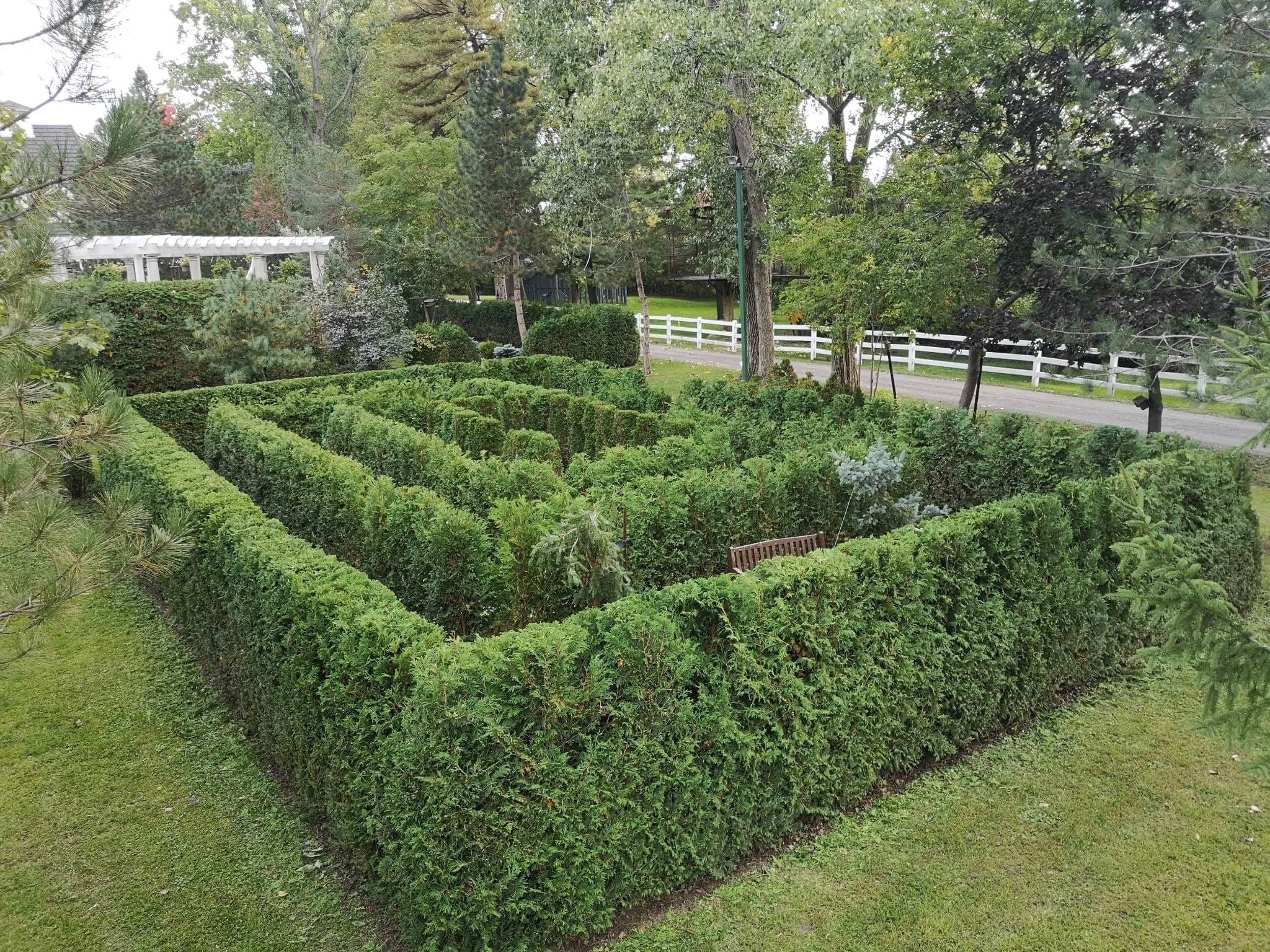
A cedar left to grow without regular trimming gains height every year, and the older it gets, the more the inner wood loses its needles. That's normal: cedar (thuja) only keeps green foliage on the outer part of its branches, where light can reach. Over time, the hedge ends up tall and dense on the surface, but hollow on the inside.
That's exactly what makes cutback pruning trickier down the road. A hedge neglected for several years often has old, needle-bare wood sitting right below the height you're aiming for, and that's where the job gets delicate.
Cutback pruning: how far you can cut without killing your cedar
Cutback pruning means significantly reducing the height or width of a hedge that's grown out of hand. The basic rule in horticulture: you can cut into wood that still has living needles, but never into completely bare wood. If you cut too deep into a section with no green, that part generally won't grow back, and you end up with a permanent gap in the hedge.
That means the maximum height you can remove depends on the actual condition of your cedar, not on some universal number. A hedge maintained every year can handle a more aggressive cut. A hedge left to its own devices for five or ten years usually has less room to work with, because the green wood is thinner.
The steps to cut back a cedar hedge properly
- Assess where the green wood is. Check how deep the needles are still alive on the sides and on top.
- Cut gradually. It's better to cut back over several passes across one or two seasons than to make a single overly severe cut that exposes all the dead wood.
- Keep a shape that respects the light. The top of the hedge should stay a bit narrower than the base, otherwise the bottom doesn't get enough light and loses its needles.
- Check for evenness. A hedge cut back unevenly stays visible for a long time, so the work needs to be done uniformly along the whole length.
This kind of work takes precision, especially when the hedge has been tall for a long time. That's why cutback pruning is treated as its own type of trim, different from a simple annual maintenance trim.
The mistakes that kill a cedar cut back too aggressively
The most common mistake is trying to fix everything in one shot. When a hedge has been too tall for years, it's tempting to bring it right down to the desired height immediately, but if that means cutting into bare wood, the result leaves gaps that won't fill back in.
Another common mistake: trimming only the top without touching the sides. The hedge ends up with a squared-off top but a base that's too wide, which makes the lack of light at the bottom even worse.
And one last thing worth knowing: there's never a guarantee that a cedar will fully grow back after a severe cutback. It depends on the age, variety, exposure, and overall condition of the hedge. That's why a hard cutback is always done with a realistic assessment of the plant's limits, not a promise of results.
When to trim: the right time of year in Quebec
In Quebec, the trimming season runs from mid-April to the end of October. For a maintenance trim or a cutback, the right time comes once the season's new growth has come in, so from late June through fall. Trimming too early, before the new growth is visible, makes it harder to judge where to cut without hitting dead wood.
Getting a price without waiting for a site visit
Height, width, the condition of the wood, and the section to be cut back all affect how much work is needed, and the price along with it. Instead of guessing, you describe your hedge's dimensions in the online quote request and get a written price in under three minutes, with no need for a trimmer to visit your home first.
Our network of partner trimmers covers the Montérégie, the South Shore and North Shore of Montreal, Montreal itself, the Laurentians, the Eastern Townships, Quebec City, and Saguenay-Lac-Saint-Jean. You can check whether your area is covered on the service areas page, or read answers to common questions on the FAQ page before submitting your request.
Related reading:
Frequently asked questions
Is it possible to trim a cedar hedge in October?
Yes, according to Gemme sa taille, October falls within Quebec's trimming season, which runs from mid-April to the end of October. It's actually a good time for a cutback, since the year's new growth is already out and clearly visible.
How do you cut back a thuja hedge?
Thuja (the botanical name for cedar) is cut back by cutting only into wood that still has green needles, never into bare wood. This is often done in stages over one or two seasons to avoid exposing too much dead wood at once.
How do you trim a cypress that's too tall?
According to Gemme sa taille, cypress follows a similar principle to cedar: you need to identify how deep the living foliage goes before cutting, because bare wood generally won't produce new growth. Every conifer reacts a bit differently depending on its age and condition, which is why a precise assessment of your hedge matters.
What time of year should you avoid trimming hedges?
As Gemme sa taille explains, outside the growing season, meaning before mid-April or after the end of October in Quebec, trimming becomes riskier because the hedge doesn't have time to recover before the frost. It's also best to avoid trimming too early in spring, before new growth has come in.
How much can you cut back a cedar hedge at once?
It depends entirely on how much green wood is still present on the hedge, there's no universal percentage. Cutback pruning is done gradually when a hedge has been neglected for a long time, to avoid cutting into a section that won't grow back.